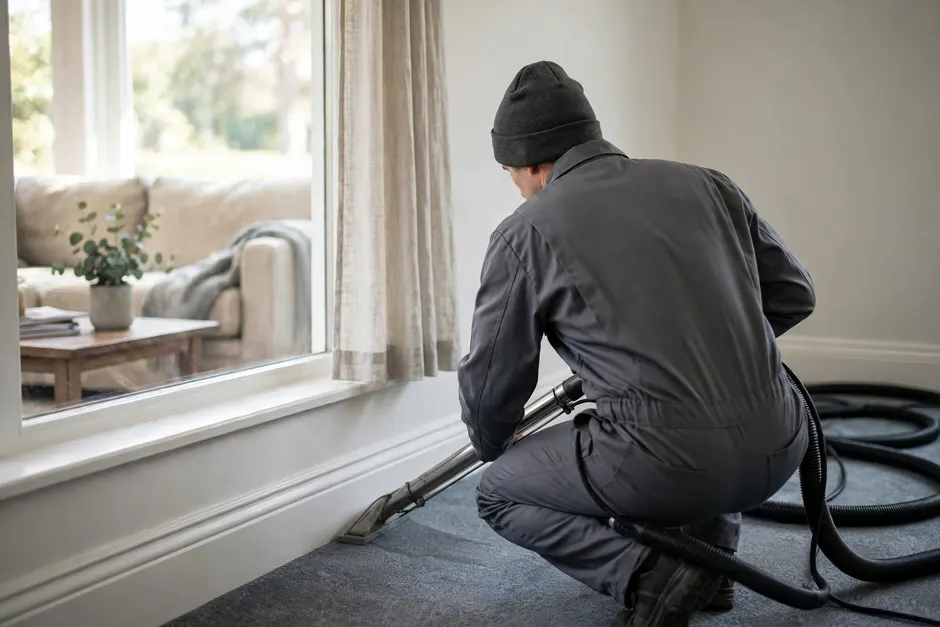
Dry carpet cleaning and steam cleaning compared
Dry carpet cleaning (low-moisture methods) and steam cleaning (hot water extraction) differ in water use, drying time, and limits. This guide compares them neutrally, with fiber qualifications, and ranks neither.
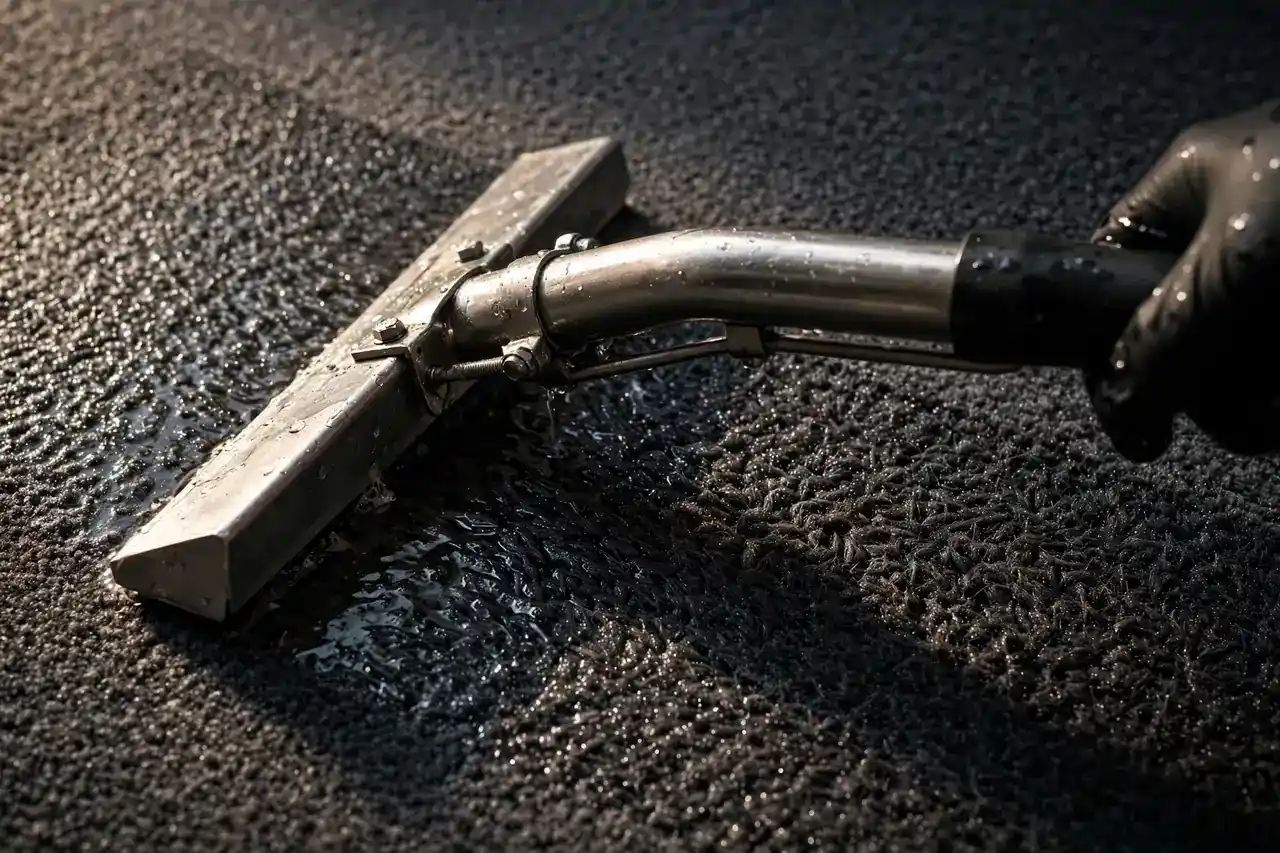
Two families of carpet cleaning methods are usually compared: hot water extraction, widely called steam cleaning, and low-moisture methods, including encapsulation and dry compound. They differ in how much water they use, how long carpet takes to dry, and what limits apply. This guide compares them neutrally and with fiber qualifications. It ranks neither, because the S100 carpet cleaning standard does not rank methods, and because conditions and fiber type decide what fits a given carpet.
How the methods differ at a glance
Hot water extraction uses pressurized hot water, spray-injected and almost immediately vacuum-extracted, and typically dries in 4 to 12 hours, up to 24 hours. Encapsulation dries to the touch in about 30 minutes to 3 hours, with soil leaving through later vacuuming, and is not presented as a deep-clean substitute. Dry compound dries in immediate to 2 hours. Bonnet cleaning dries in under 1 to 2 hours, with the spread reaching 3 hours, and carries the strongest cautions in the research for this guide. Shampoo alone dries in 6 to 12 hours, possibly longer without extraction, with the highest residue risk. All ranges are typical and conditions-dependent, never promises.
Water use is the central difference. Wet methods put more water into the carpet and rely on extraction and drying conditions to remove it. Low-moisture methods put down far less water and rely on other mechanisms to hold or carry soil. Neither difference, on its own, settles which method fits a given carpet, room, or fiber.
How low-moisture cleaning works, in general terms
Low-moisture methods share one trait: they use far less water than hot water extraction. Encapsulation applies a solution that crystallizes around soil so it can be removed by later vacuuming, which is why vacuuming after the method matters to the result. Dry compound uses an absorbent compound worked into the carpet and then vacuumed away. Bonnet cleaning uses a rotating pad to absorb soil from the surface. Each is described here in general terms only, as education about methods, not as a statement about any method used by this business.
The limits differ by method. Encapsulation carries the limit already noted: it is not a deep-clean substitute. Bonnet cleaning carries cautions about swirl marks, pile disturbance, and residue, and Shaw does not recommend it. Olefin carries a particular caution for bonnet cleaning, because its low softening point means rotary friction and heat can cause irreversible melting. No local competitor evidence was found for a dry-compound method in the research for this guide.
How steam cleaning (hot water extraction) works
Hot water extraction is defined, in a definition secondary-cited to the Carpet and Rug Institute (CRI) glossary, as pressurized hot water spray-injected into the carpet and almost immediately vacuum-extracted. The water carries soil out of the fibers as it is extracted. Published drying figures separate equipment types: vehicle-mounted equipment at 4 to 8 hours, and portable equipment at 12 to 24 hours, within the overall typical range of 4 to 12 hours, up to 24 hours.
The main caution for hot water extraction is over-wetting: more water applied than extraction removes, leaving moisture in the fibers, backing, and pad. The EPA advises that damp indoor materials be dried within 24 to 48 hours, and recommends indoor humidity between 30% and 60%. Those EPA figures are general educational context for drying. Drying conditions, fiber, and pad all affect the result.
What affects how long results last
How long carpet looks clean after cleaning depends on traffic, tracked-in soil, residue left in the fibers, humidity and drying conditions, and how deep the original soil sat. Method alone does not decide it. Residue risk varies by method, with shampoo alone carrying the highest residue risk, and residue in traffic lanes can make carpet look gray again sooner. Wicking, in which soil from below moves upward as carpet dries in hours to 3 days in the same color, is a separate pattern from re-soiling over weeks. No method carries a promise about how long results last, and the guide on carpet that looks dirty again after cleaning explains both patterns.
Steam and low-moisture cleaning for pet stains in Cedar Rapids IA
For pet stains, depth decides the outcome more than method family does. Pet urine can reach the backing, pad, and subfloor, and dried urine salts reactivate with humidity. A method that reaches only the fibers addresses a different scope from contamination that has reached the pad. Enzymatic treatments, in general terms, target urine salts and crystals and need sufficient volume, dwell time, and compatible conditions. Oxidizing treatments, in general terms, give fast stain lightening but may give only short-term urine-odor relief alone. Neither category is a product recommendation, and no outcome is promised. The guides on old pet stains and returning pet odor set out the depth pattern in full.
What to ask about cost, without assuming a figure
This guide contains no prices, because method comparisons and price figures answer different questions, and published figures differ by scope, unit, and publisher. The useful cost questions are about the quote itself: which presentation model applies, per-room, per-square-foot, or whole-home and package; what a room means, including any size cap; what is included and what counts as an add-on; and what minimums apply. Published third-party figures, each dated and attributed, are collected in the guide on carpet cleaning cost in Cedar Rapids. None of those figures is this business's price.
Is steam cleaning suitable for all carpets in Cedar Rapids?
No method suits every fiber without qualification, and no method, chemistry, temperature, or drying claim is made here without fiber qualification:
- Nylon: acid-dye uptake means coffee, tea, and wine can dye unprotected nylon, and heat accelerates uptake. Bleach is to be avoided for nylon.
- Polyester and PET: oleophilic, holding oils, and matting may not reverse.
- Olefin: solution-dyed and colorfast, with a low softening point, so rotary friction and heat can melt it irreversibly. It also has a tendency to wick.
- Wool: the highest caution of the fibers covered here, sensitive to alkali, heat, and agitation, with felting, shrinkage, and browning risks. Published pH ranges and temperature caps conflict, so this guide states direction only and no numeric range as authoritative. No bleach for wool.
Oriental and hand-knotted rugs call for construction-specific assessment, colorfast testing, and often off-site washing, and blends are treated as wool. Fiber identification comes before any method discussion, and owner competence and products would need confirmation before any wool or Oriental claim is made.
Common mistakes to avoid
- Treating drying time as the only difference: drying ranges, residue risk, depth reached, and fiber limits all differ by method.
- Asking which dry carpet cleaning or steam cleaning method ranks first: the S100 carpet cleaning standard does not rank methods, and conditions and fiber decide what fits.
- Skipping fiber identification: every method claim in this guide is fiber-qualified, because the same method carries different cautions for different fibers.
- Comparing prices across different scopes: per-room, per-square-foot, and package figures are different units and cannot be blended into one figure.
When to call a professional
A call is worth making when fiber type is unknown, when wool or hand-knotted construction is involved, when pet contamination may have reached the pad, or when the choice between methods needs a professional reading of the carpet in question. Describing the carpet, the fiber if known, and the history of the area helps the conversation. Call Reliable Carpet Inc at (319) 319-9212, Monday to Friday, 8 AM to 5 PM, to discuss what is being seen. For background on the service itself, see the carpet cleaning page.
Frequently Asked Questions
How does dry carpet cleaning differ from steam cleaning in Cedar Rapids IA?
Hot water extraction spray-injects pressurized hot water and vacuum-extracts it almost immediately, with typical drying of 4 to 12 hours, up to 24 hours. Low-moisture methods, including encapsulation and dry compound, use far less water and dry faster, at about 30 minutes to 3 hours and immediate to 2 hours. The S100 carpet cleaning standard does not rank methods.
Which carpet cleaning method dries faster?
Published drying ranges are shorter for low-moisture methods: encapsulation about 30 minutes to 3 hours to touch-dry, and dry compound immediate to 2 hours, against 4 to 12 hours typical, up to 24 hours, for hot water extraction. Drying time is one difference among several, and ranges depend on conditions.
Is steam cleaning suitable for all carpet fibers in Cedar Rapids?
No single method suits every fiber without qualification. Wool carries the highest caution, being sensitive to alkali, heat, and agitation. Olefin has a low softening point, so heat and rotary friction carry cautions. Nylon can take up dyes from coffee, tea, and wine, with heat accelerating uptake. Fiber identification comes first.
What affects how long carpet cleaning results last?
Traffic, tracked-in soil, residue in the fibers, humidity and drying conditions, and how deep the original soil sat all affect how long results last. Method alone does not decide it, and no method carries a promise about how long results last.
What should cost questions cover for carpet cleaning in Cedar Rapids IA?
Cost questions are quote questions: which presentation model applies, what a room means, what is included, and what the minimums are. Published third-party figures are collected, dated and attributed, in the guide on carpet cleaning cost in Cedar Rapids. None of them is this business's price.
Get help with carpet cleaning in Cedar Rapids
Call Reliable Carpet Inc at (319) 319-9212 to discuss cleaning methods and fiber questions. Office hours are Monday to Friday, 8 AM to 5 PM, Saturday and Sunday closed.