Why does my carpet still smell after pet stain removal
Carpet that still smells after pet stain removal usually has a source deeper than the surface that was treated. Pet urine chemistry and depth explain why surface-only care often falls short.
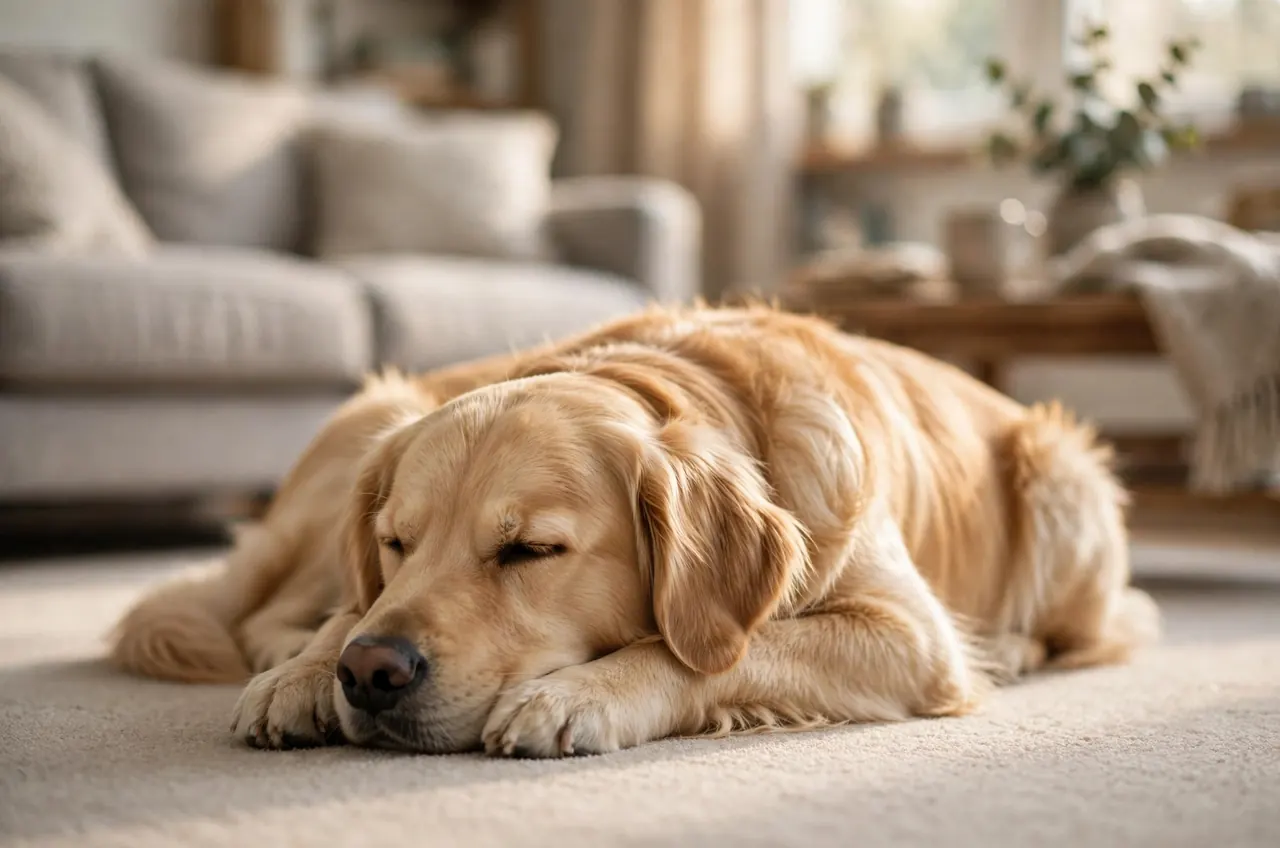
Pet odor that returns after stain removal is usually a depth problem. The carpet surface can look clean while the source of the odor sits in the backing, the pad, or the subfloor below. This guide explains pet urine chemistry in general terms, why depth decides the outcome, and when professional assessment helps. No outcome is promised for any one carpet, and no product is recommended here.
Urine can soak deeper than the surface that was cleaned
Pet urine is a liquid, and liquids move downward through carpet fibers into the backing and pad, and in some cases to the subfloor. The visible stain on the surface is only part of the affected area. Below the surface, urine salts and crystals bind to fiber, backing, and pad. Surface treatment reaches the fibers it touches; it does not, on its own, establish how deep the contamination goes or whether the pad is affected.
Repeated accidents in the same place add to the depth of contamination over time. Older spots, and spots from dogs that have used the same area repeatedly, are more likely to involve the pad. That history matters more than the current appearance of the surface, which can look clean while odor persists below.
Why carpet still smells after pet stain removal in Cedar Rapids
Three factors, taken together, explain most returning pet odor:
The pad below the carpet
When urine reaches the pad, the pad holds contamination that surface treatment cannot reach. Odor can therefore return after the carpet itself looks and smells clean for a short time. Whether the pad is affected cannot be judged from the surface alone.
Residue and moisture
Residue left in fibers can hold moisture and soil, and moisture in the carpet can reactivate dried urine salts. Cleaning that adds moisture without reaching the depth of the contamination can therefore leave odor unchanged, or make it more noticeable as the carpet dries.
Humidity reactivating dried urine salts
Uric-acid crystals are water-insoluble and reactivate with humidity. Odor that fades in dry conditions and returns when indoor humidity rises fits this pattern. The EPA recommends indoor humidity between 30% and 60%, which is useful general context, not a treatment claim.
How the cleaning approach can leave odor behind
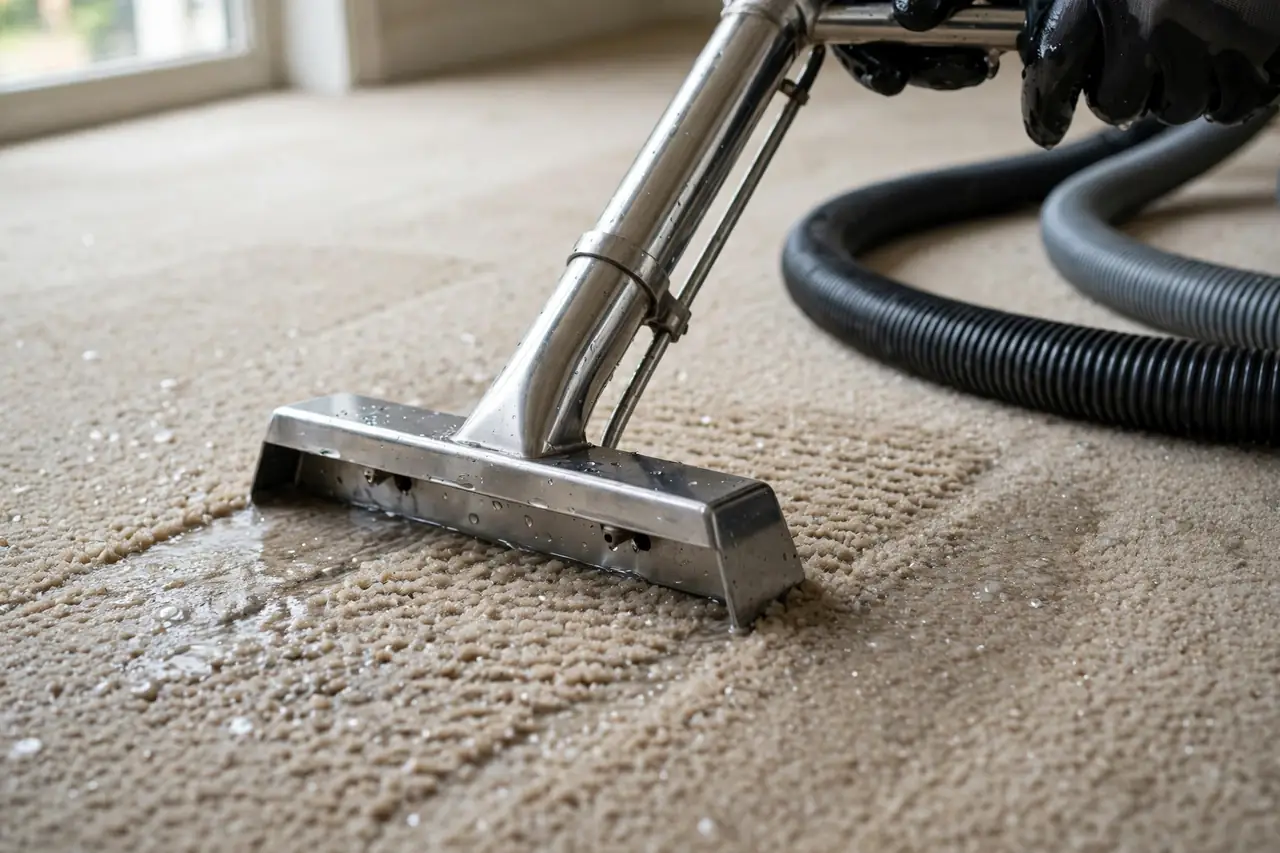
Approaches differ in what they reach. Surface approaches address the fibers. Approaches that reach deeper address more of the contamination, but no approach can undo dye or backing damage that has already occurred, and no approach carries a promise of odor removal. Enzymatic treatments, in general terms, target urine salts and crystals, and need sufficient volume, dwell time, and compatible conditions to act. Oxidizing treatments, in general terms, give fast stain lightening but may give only short-term urine-odor relief when used alone, a trade-magazine view that carries a colorfastness caution. These are general category descriptions from the research for this guide, not product recommendations and not instructions.
Products containing ammonia are generally not suited to urine spots, because urine itself breaks down into ammonia through bacterial action. That general chemistry caution is included here as education, not as a product recommendation in either direction.
What decides whether lingering pet odor can be addressed
Depth decides the outcome. Contamination limited to the fibers is a different scope from contamination that has reached the pad or subfloor, and pad or subfloor contamination may require pad replacement as part of the scope. Pad replacement is an owner scope decision, to be discussed rather than assumed. Fiber type also matters: no treatment claim applies equally to every fiber, and wool in particular carries the highest caution in the research for this guide, being sensitive to alkali, heat, and agitation.
Age of the spot, number of repeat accidents, and whether the area has been treated before all affect the scope. A realistic conversation starts with that history and with how the odor behaves, including whether it changes with humidity. For background on the service itself, see the pet stain and odor removal page, and the companion guide on old pet stains and their limits.
Common mistakes that make pet odor worse
- Treating only the visible stain when carpet still smells after pet stain removal: the visible mark is usually smaller than the affected area below the surface.
- Adding moisture without reaching the depth: moisture can reactivate dried urine salts and make odor more noticeable.
- Assuming a single treatment settles the matter: depth, fiber, and repeat history all affect the outcome, and no outcome can be promised.
- Covering odor instead of describing it: masking the smell leaves the source in place and makes assessment harder.
When to call a professional
A call is worth making when odor returns after surface care, when the affected area is large or old, when repeat accidents have happened in the same place, or when it is unclear how deep the contamination reaches. Describing the history of the spot, how the odor behaves with humidity, and what has already been tried helps the conversation. Call Reliable Carpet Inc at (319) 319-9212, Monday to Friday, 8 AM to 5 PM, to discuss what is being seen.
Frequently Asked Questions
Why does my carpet still smell after pet stain removal in Cedar Rapids IA?
Pet urine can reach the backing, pad, and subfloor, and dried urine salts reactivate with humidity. Surface treatment that does not reach the depth of the contamination leaves the source in place, so odor returns even when the carpet looks clean.
What causes pet odor to return after cleaning in Cedar Rapids IA?
Depth is the main factor. Uric-acid crystals bind to fiber, backing, and pad and are water-insoluble, so they are not removed by water alone. Humidity reactivates them, which is why odor can come and go with indoor conditions.
Does humidity affect pet odor in carpet?
Yes, in general terms. Uric-acid crystals reactivate with humidity, so odor that seems gone in dry conditions can return when indoor humidity rises. The EPA recommends indoor humidity between 30% and 60%, which is useful general context.
Can surface cleaning reach contamination in the pad?
Not reliably. Pad and subfloor contamination sits below the carpet surface, and depth decides the outcome. Where contamination has reached the pad, pad replacement may be part of the scope, which is an owner scope decision to discuss, not an assumption.
When does professional assessment help for pet odor in Cedar Rapids?
Assessment helps when odor returns after surface care, when the affected area is large or old, or when it is unclear how deep the contamination reaches. Describing the history of the spot and how the odor behaves with humidity helps the conversation.
Get help with carpet cleaning in Cedar Rapids
Call Reliable Carpet Inc at (319) 319-9212 to discuss pet odor that returns after stain removal. Office hours are Monday to Friday, 8 AM to 5 PM, Saturday and Sunday closed.