How to Remove Red Wine Stains from Carpet
Red wine is a dye risk as much as a stain: on unprotected nylon it can dye the fiber, and heat accelerates that uptake. This guide explains the fiber limits honestly, without promising removal.
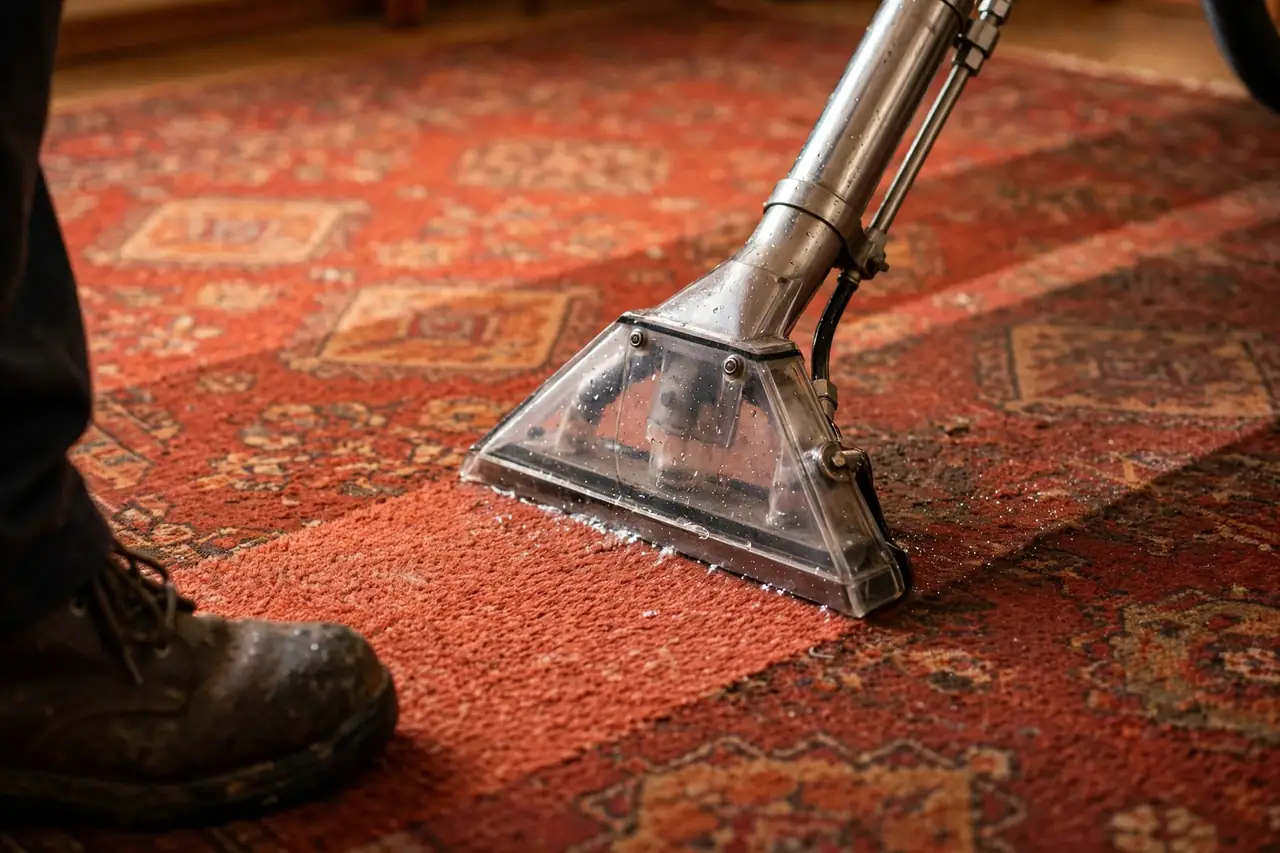
Red wine stains are stubborn for a chemical reason, not only because the liquid is dark. On unprotected nylon, red wine can dye the fiber itself, and that dye uptake is a different problem from soil sitting on the surface. Heat accelerates the uptake. This guide explains the fiber limits, what first response can and cannot do, and when professional assessment helps. No removal outcome is promised, and no mixture or recipe is recommended.
Why red wine stains are so stubborn
Red wine carries color that can bind to fiber. Nylon is the fiber with the clearest caution in the research for this guide: acid-dye uptake means coffee, tea, and wine can dye unprotected nylon, and heat accelerates that uptake. Once dye has been taken up by the fiber, the mark is no longer surface soil, and surface attention alone cannot be assumed to reverse it. Bleach is to be avoided for nylon.
Other fibers behave differently, which is why every claim in this guide is fiber-qualified. Olefin is solution-dyed and colorfast, so dye uptake is a different matter there, while its low softening point carries heat and friction cautions of its own. Polyester holds oils, and matting may not reverse. Wool carries the highest caution overall, being sensitive to alkali, heat, and agitation, with no bleach. Fiber identification comes before any discussion of what can be done.
What the first response can and cannot do
The first response can limit spread. Lifting liquid without spreading it across more fibers is the general concept: the aim is to keep the affected area as small as possible while the liquid is still liquid. The first response cannot establish fiber type, cannot reverse dye uptake that has already happened, and cannot reach liquid that has already moved into the backing.
Two cautions apply from the start. Heat accelerates dye uptake in nylon, so heat is avoided in general terms. Rubbing or spreading moves liquid across more fibers and enlarges the affected area. Beyond those general concepts, this guide recommends no mixture, product, or sequence of steps, because fiber type and dye uptake decide what is realistic.
What removal depends on: fiber, heat, and time
Three factors decide what is realistic for a red wine stain, and all three must be considered together:
Fiber type
Nylon, polyester, olefin, and wool respond differently to wine, heat, and treatment. No stain claim in this guide applies to every fiber, and unknown fiber type is itself a reason to seek assessment before acting.
Heat
Heat accelerates dye uptake in nylon and carries cautions for wool and olefin as well. Whether heat has already been applied, through hot water, a dryer, or a heated appliance, changes the scope of what follows.
Time and depth
Fresh liquid in the fibers is a different scope from dried wine that has reached the backing. Time allows uptake and depth to increase, and depth decides the outcome in the same way it does for pet stains. The guide on carpet that looks dirty again after cleaning explains how soil held below the surface can return as carpet dries.
Approaches and their limits, in general terms
Approaches to red wine stains are described here only in general terms, with their limits stated. Surface approaches address the fibers and the liquid they hold. They do not address dye uptake in the fiber or liquid that has reached the backing. Colorfastness is a standing caution: any approach that risks moving color, whether the wine's color or the carpet's own dye, needs fiber knowledge first. Oxidizing treatments, in general terms, give fast stain lightening but carry a colorfastness caution, a category description from the research for this guide, not a product recommendation.
What this guide does not do is recommend a home mixture or a sequence of steps. Fiber type, dye uptake, heat history, and depth vary too much for a single sequence to be honest. Where the fiber is unknown or the spill is large, assessment comes before action. For background on the service itself, see the carpet cleaning page.
Old red wine stains: why limits tighten with time
Old red wine stains carry tighter limits than fresh ones. Dye uptake has had time to progress, liquid has had time to reach the backing, and any heat applied in the meantime has accelerated uptake. An old stain that looks faint on the surface can still involve the backing, and an old stain that looks dark can be limited to the fibers. Appearance alone does not establish depth or uptake.
Previous attempts also matter. What has already been applied, and whether heat was involved, changes the scope. Describing that history, along with the fiber type if known, gives a clearer picture than the current appearance of the mark alone.
Common mistakes to avoid
- Applying heat to red wine stains before knowing the fiber: heat accelerates dye uptake in nylon and carries cautions for other fibers.
- Rubbing or spreading the spill: spreading enlarges the affected area and moves liquid into more fibers.
- Assuming surface appearance shows depth: liquid that has reached the backing is a different scope from liquid in the fibers.
- Expecting a promised outcome: no stain category in this guide carries a promise of removal, and dye uptake cannot be assumed reversible.
When to call a professional
A call is worth making when the fiber is unknown, when the spill is large or old, when heat has already been applied, or when the stain has spread beyond the original spill. Describing the fiber if known, the size of the spill, how long ago it happened, and what has already been tried helps the conversation. Call Reliable Carpet Inc at (319) 319-9212, Monday to Friday, 8 AM to 5 PM, to discuss what is being seen.
Frequently Asked Questions
Can red wine stains be removed from carpet in Cedar Rapids IA?
It depends on fiber, heat, and time. Red wine can dye unprotected nylon, and dye uptake is not the same as surface soil. No removal outcome can be promised for any one carpet, and fiber type decides what is realistic.
Why is red wine harder on nylon carpet?
Nylon takes up acid dyes, so coffee, tea, and wine can dye unprotected nylon fibers. Heat accelerates that uptake. That fiber-specific chemistry is why nylon carries a particular caution for red wine, and why heat is avoided in general terms.
What should the first response to a red wine spill avoid?
Heat, which accelerates dye uptake in nylon, and rubbing or spreading, which moves the liquid across more fibers. Lifting liquid without spreading it is the general first-response concept. No mixture or recipe is recommended here.
Do old red wine stains differ from fresh ones?
Yes. Time allows dye uptake and depth to increase, and dried wine that has reached the backing is a different scope from fresh liquid in the fibers. Older stains carry tighter limits, and no outcome is promised either way.
When does professional assessment help for a red wine stain in Cedar Rapids?
Assessment helps when the fiber is unknown, when the spill is large or old, when heat has already been applied, or when the stain has spread. Describing the fiber if known, the size of the spill, and how long ago it happened helps the conversation.
Get help with carpet cleaning in Cedar Rapids
Call Reliable Carpet Inc at (319) 319-9212 to discuss red wine stains and fiber questions. Office hours are Monday to Friday, 8 AM to 5 PM, Saturday and Sunday closed.